
Gummies are the fastest-growing format in supplements, and for good reason: people actually like taking them. But they are also one of the hardest formats to get exactly right. A study of melatonin gummies sold in the US showed how wide the gap between the label and the bottle can be.
What the gummy study found
In 2023, researchers writing in JAMA tested 25 melatonin gummy products bought in the US. Only 3 contained a melatonin amount within 10% of what the label said. The rest ranged from about 74% to 347% of the labeled dose. One product contained no detectable melatonin at all, but did contain CBD.
The study tested one bottle of each product, so it can’t say how every batch performs. But it is a clear signal that a gummy label and the gummy itself don’t always match.
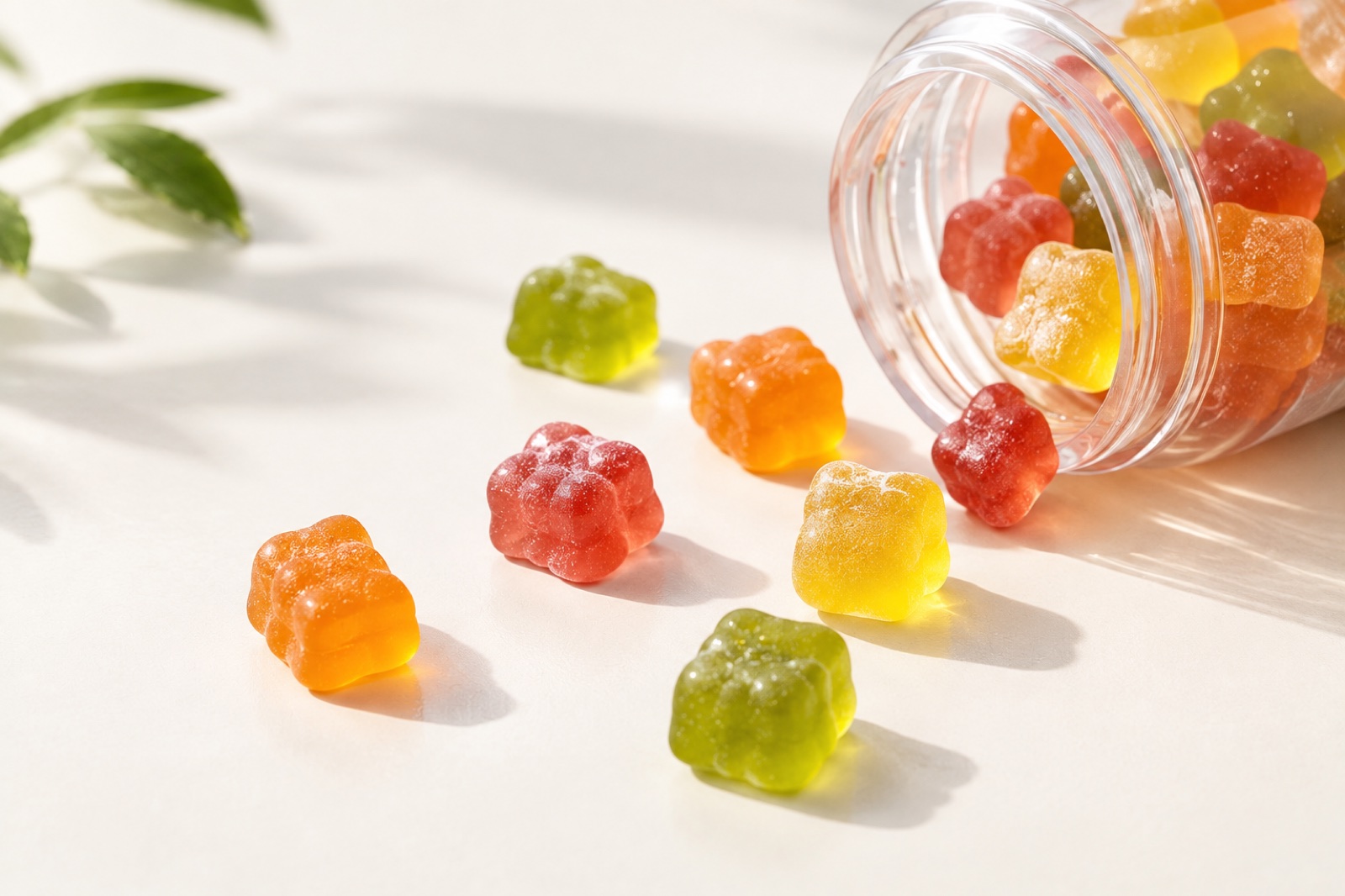
Why gummies are hard to dose
A gummy is a cooked, poured and cured food matrix, not a dry blend pressed into a tablet. That creates a few specific problems:
- Heat. The base is cooked, and some actives start to break down at those temperatures.
- Moisture. Gummies hold water, which speeds up the degradation of sensitive ingredients over the shelf life.
- Mixing and depositing. The active has to be spread evenly through a thick, warm mass and then deposited piece by piece. Uneven mixing means uneven pieces.
- Overage. To keep the label claim true at the end of shelf life, makers often add extra at the start. Add too little and the product falls short later; add too much and it overshoots on day one.
Who checks the label?
In the US, FDA doesn’t approve dietary supplements before they are sold. The company selling the product is responsible for making sure the label is accurate and the product is safe, and the manufacturer has to follow dietary supplement cGMP rules, including testing that the product meets its specifications.
What consumers can check
- Look for third-party certification such as USP Verified or NSF Certified, which check that contents match the label.
- Choose brands that publish certificates of analysis or test results.
- Be especially careful with gummies for children, where dose accuracy matters most.
What this means for brands selling gummies
- Set a realistic overage. Base it on stability data for your actual formula, not a rule of thumb.
- Test finished gummies, not just the blend. Potency testing on the finished product, at release and across shelf life, is the only way to know what customers receive.
- Check uniformity. Sample from across the batch, not just one spot, so uneven depositing shows up.
- Protect the product. Packaging and storage instructions should control heat and humidity, since both shorten a gummy’s life.
- Consider certification. A third-party seal gives retailers and shoppers a reason to trust the number on the front.
The takeaway
A gummy label is a promise about every piece, through the last day of shelf life. Keeping that promise takes realistic overage, finished-product testing and good packaging. Brands that do this, and show the results, stand out in a format where accuracy can’t be taken for granted.
Sources
- Cohen PA et al. Quantity of Melatonin and CBD in Melatonin Gummies Sold in the US. JAMA 2023;329(16):1401–1402.
- US FDA, Dietary supplements: FDA does not approve dietary supplements before marketing; 21 CFR Part 111 (cGMP for dietary supplements).
- USP Dietary Supplement Verification Program; NSF/ANSI 173 certification for dietary supplements.