
A lot of new brands hear a high minimum order quantity and assume the manufacturer can’t handle small orders. Often that isn’t the real constraint. The number that pushes the minimum up is usually the packaging: a custom-printed bottle, a custom mold or a fully custom box. The product itself can often be made in a much smaller first run.
That means packaging doesn’t have to be all-or-nothing. There is a sensible path from stock to custom, and most brands are better off walking it in steps.
Why packaging drives the MOQ
Packaging suppliers have their own minimums. A custom bottle needs a mold. Printed bottles, printed pouches and custom cartons need print runs that only make sense in volume. When a brand asks for all of that on the first order, the packaging minimum becomes the project minimum, often well above what the product line needs.
Step one: stock bottle, your label
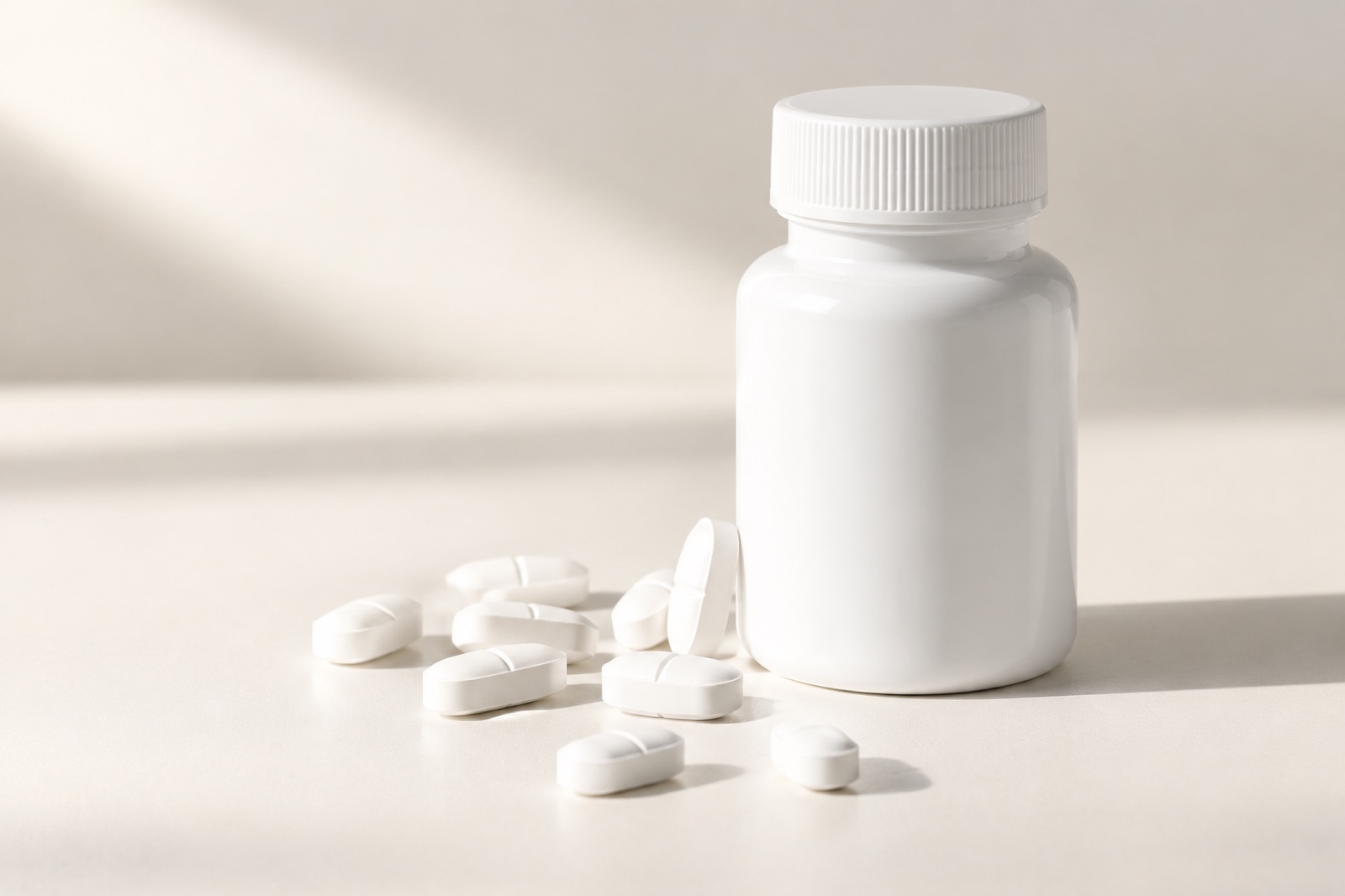
Start with a stock bottle or pouch the factory already uses, and put your own label on it. The label is where your brand lives anyway: name, design, Supplement Facts, claims and barcode. Labels can be printed in much smaller runs than custom containers, so the first order can stay small enough to test the market.
Stock packaging isn’t a compromise on quality. Standard bottles are made for supplements, and they already run on the factory’s filling, capping and labeling lines. That also means fewer surprises with fill counts and line settings.
Step two: upgrade the pieces that matter
Once the product sells, upgrade selectively. A different closure, a colored bottle, a printed shrink sleeve or a retail carton can each change the shelf presence without a full custom mold. Pick the upgrade that matters most to your customers and your sales channel.
Step three: full custom, when volume supports it
A custom container makes sense when demand is proven and the volume covers the mold and print minimums comfortably. By then you also know your real fill count, serving size and best-selling variants, so the custom design is built around facts instead of guesses.
Things to settle early, whichever step you’re on
- Fill count and bottle size. They decide how much headspace the bottle has and how the label fits.
- Label size and bottle shape. Labels go on curved surfaces. Check the dimensions against the actual bottle before printing.
- Lot and date coding. Leave a clear spot for the code so it isn’t printed over a seam or a curve.
- Protection. Light-sensitive or moisture-sensitive products may need amber or opaque bottles, induction seals or desiccants, even in stock packaging.
The takeaway
If a quote’s MOQ looks out of reach, ask what is driving it. Very often it is the packaging, not the product. Starting with a stock bottle and your own label, then upgrading as demand grows, keeps the first order realistic and leaves custom packaging for when it pays off.